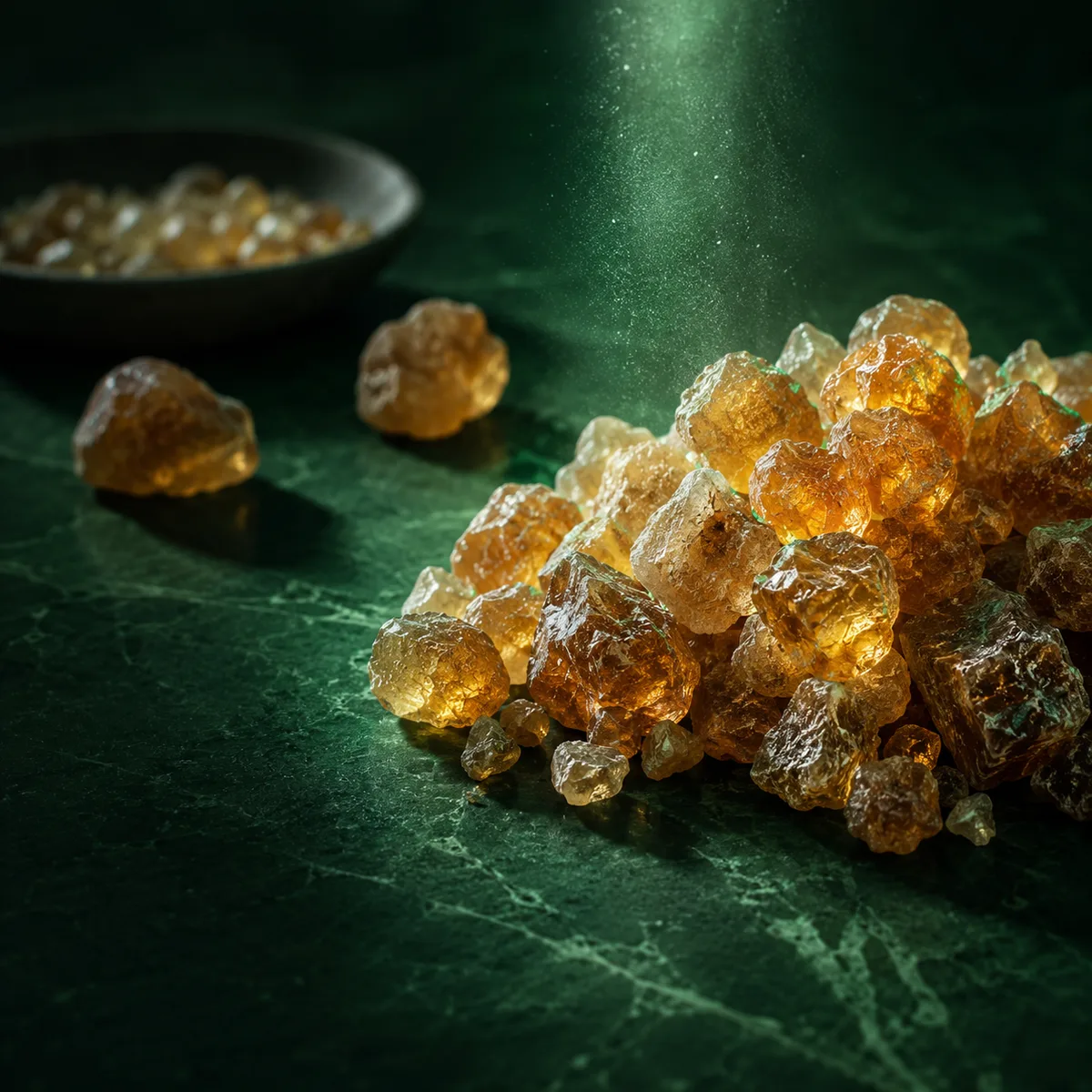
Gum arabic is a natural resin that seeps from cuts made in the trunk of the acacia tree and hardens on contact with air. It is water soluble, tasteless and odourless, which is why food manufacturing uses it to stabilise emulsions without disturbing the character of the product itself.
The gum belt
Most of world supply comes from a belt crossing Africa from east to west along the Sahel. Sudan sits at the centre of it and produces the grades historically treated as the reference quality. Harvest begins with tapping the trees; the resin is left to harden for a few weeks, and collection is done by hand.
Hashab and talha
- Hashab (Acacia senegal): lighter in colour, higher in solubility, and the type preferred by the beverage industry.
- Talha (Acacia seyal): darker and more economical, generally used in fibre fortification and industrial applications.
Why it has not been replaced
Synthetic alternatives have been worked on for a long time, but nothing yet reproduces gum arabic's emulsion behaviour at low viscosity and high concentration at the same time. That keeps the natural product strategically important.
The practical side of trading it
The resin ships as natural lump, kibbled or powder. Lump is the least processed form and is preferred where the buyer has their own milling capacity. Because its density is low, container tonnage is noticeably below that of pulses; a 20-foot container carries roughly 18 tonnes. That feeds directly into the freight calculation.
With Sudanese origins, logistics planning matters as much as the product. Port congestion and inland haulage conditions are the real determinants of lead time, and it pays to discuss them at the quotation stage.